Designing a home in the Lowcountry is unlike building anywhere else. Hilton Head Island and the surrounding Bluffton area are defined by warm temperatures, high humidity, coastal storms, and abundant natural beauty. A well-designed custom home doesn’t fight these conditions. It works with them. Understanding how the Lowcountry climate shapes architecture is essential to creating a home that is comfortable, durable, and timeless.
Managing Heat and Humidity
The Lowcountry’s long, warm seasons demand thoughtful design strategies that promote comfort and efficiency. High ceilings allow heat to rise, while well-placed windows encourage airflow throughout the home. Custom floor plans often emphasize open layouts that support natural ventilation and reduce reliance on mechanical cooling.
Material choices also matter. Moisture-resistant finishes, properly sealed building envelopes, and advanced insulation help protect the home from humidity while maintaining consistent indoor temperatures year-round.
Designing for Airflow and Natural Ventilation
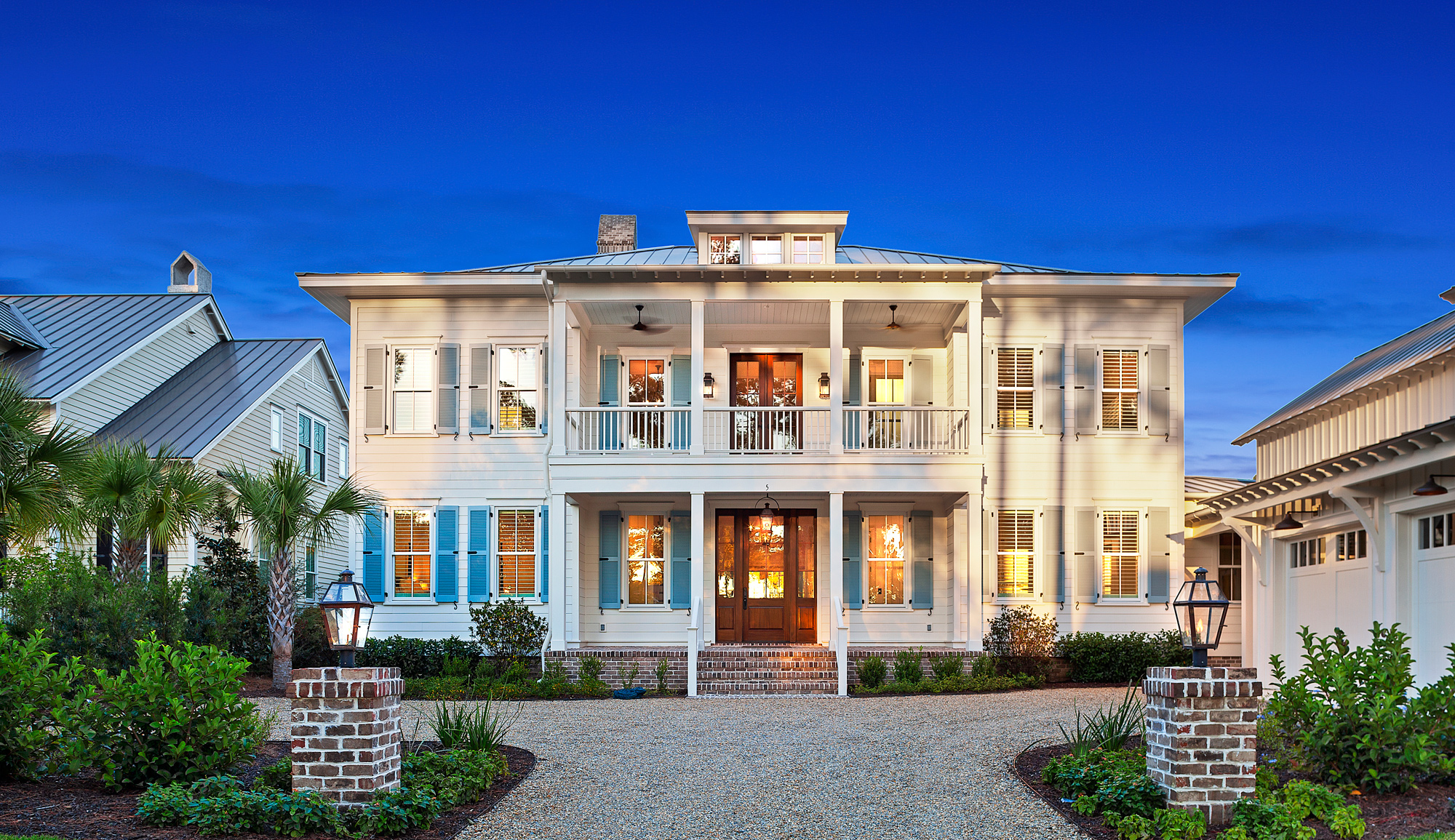
Before air conditioning, Lowcountry homes were designed to capture coastal breezes. That principle still applies today. Thoughtful window placement, aligned openings, and covered porches allow fresh air to move through the home naturally.
Custom homes can be oriented on the lot to take advantage of prevailing winds, while porches and shaded outdoor areas act as transitional spaces that cool the home and expand everyday living. This emphasis on airflow enhances comfort and reinforces the connection between indoor and outdoor spaces.
Protecting Against Coastal Weather
Storms and heavy rain are a reality of coastal living. Custom home design in the Lowcountry accounts for this through durable materials and smart construction techniques. Elevated foundations, sloped rooflines, and efficient drainage systems help manage water and reduce long-term risk.
Roofing materials and exterior finishes are selected not only for beauty but for their ability to withstand wind, salt air, and sun exposure. These decisions contribute to the home’s longevity and reduce maintenance over time.
Maximizing Shade and Sun Control
While natural light is a defining feature of Lowcountry homes, managing sun exposure is equally important. Deep porches, roof overhangs, and strategically placed windows allow light to enter the home without excessive heat gain.
Shaded outdoor living spaces provide relief from the sun while extending usable square footage. This balance of light and shade keeps interiors bright, comfortable, and energy-efficient.
Energy Efficiency for Coastal Living
Energy-efficient design is especially important in a warm, humid climate. High-performance windows, advanced insulation, and modern HVAC systems help regulate indoor temperatures and reduce energy consumption.
Custom homes built with the Lowcountry climate in mind often perform better over time, offering lower utility costs and improved comfort compared to older or retrofitted homes.
A successful Lowcountry home begins with an understanding of its environment. At Boshaw Residential, we design custom homes on Hilton Head Island and in Bluffton that respond thoughtfully to the coastal climate. By blending timeless architecture with modern building practices, we create homes that are comfortable, resilient, and perfectly suited to Lowcountry living.